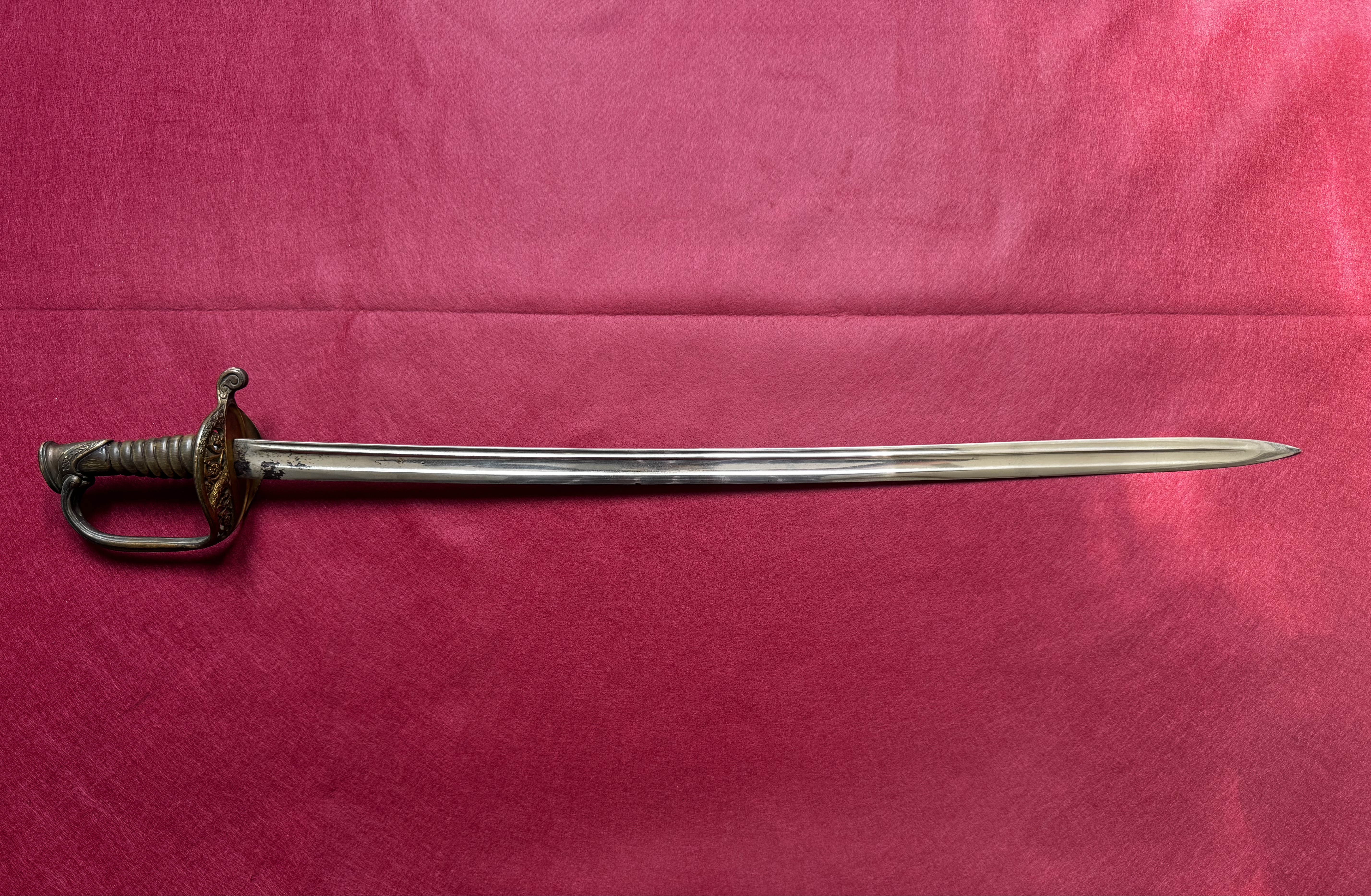
View 01
Primary artifact view.
Artifact record and analysis
Type / Pattern: French Model 1845 Infantry Officer Sword
Approx. Date: Mid-19th century (c. 1845–1870)
Origin: France – Private purchase, various manufacturers (often Klingenthal or Solingen blades)
Current Status: Private collection (Historical Sword Society)
Abstract: The French Model 1845 Infantry Officer Sword represents a transitional form between battlefield weapon and symbolic sidearm. Designed during a period of increasing military standardization, it reflects both the functional requirements of infantry officers and the growing importance of uniformity, prestige, and personal distinction. This example demonstrates the refined hilt construction, straight thrust-oriented blade, and decorative elements typical of mid-19th century French officer weapons.
Use this section for detailed photographs: full length, hilt, pommel, markings, scabbard, and close-ups of condition.
Primary artifact view.
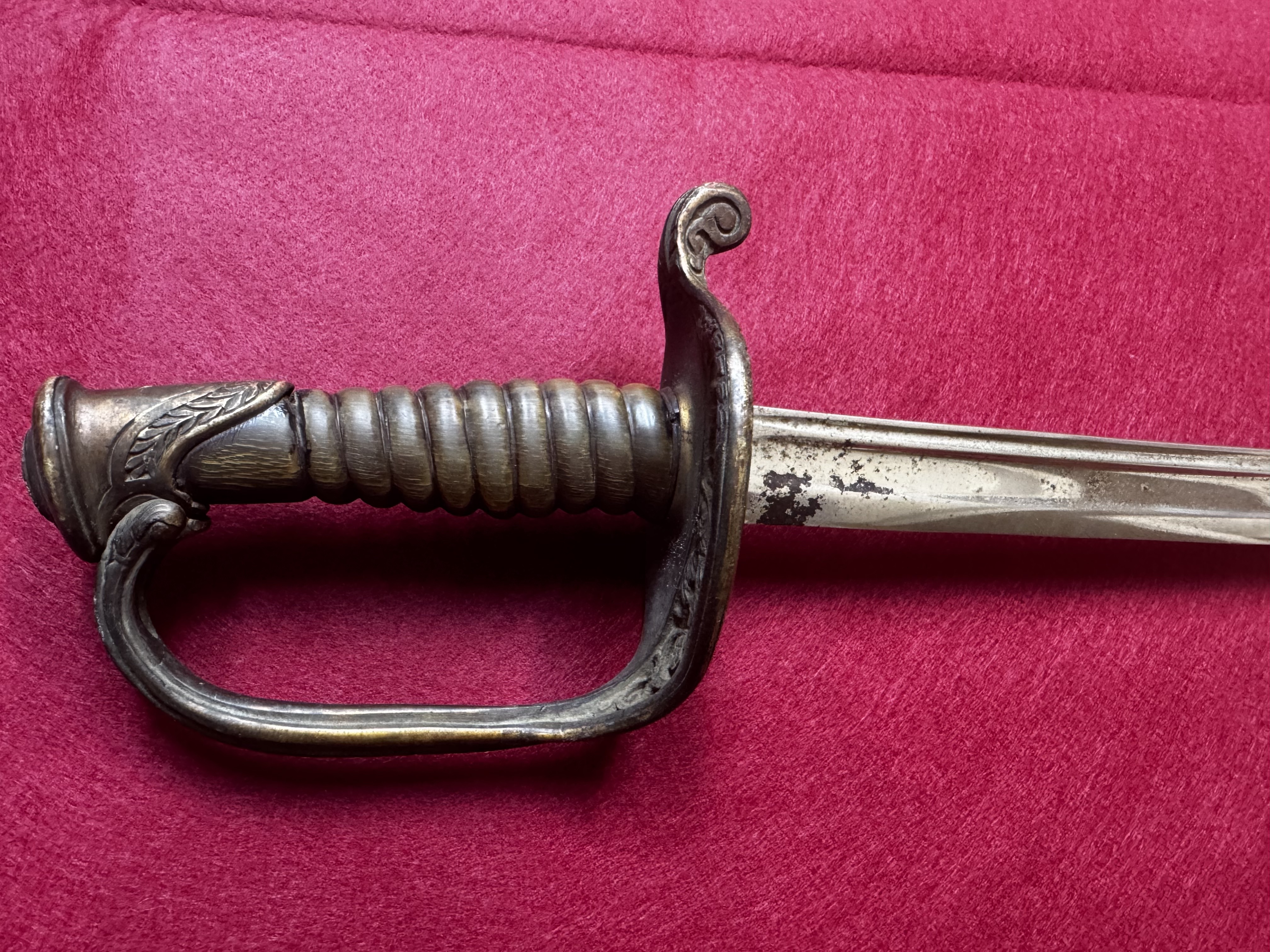
Supplementary artifact view.
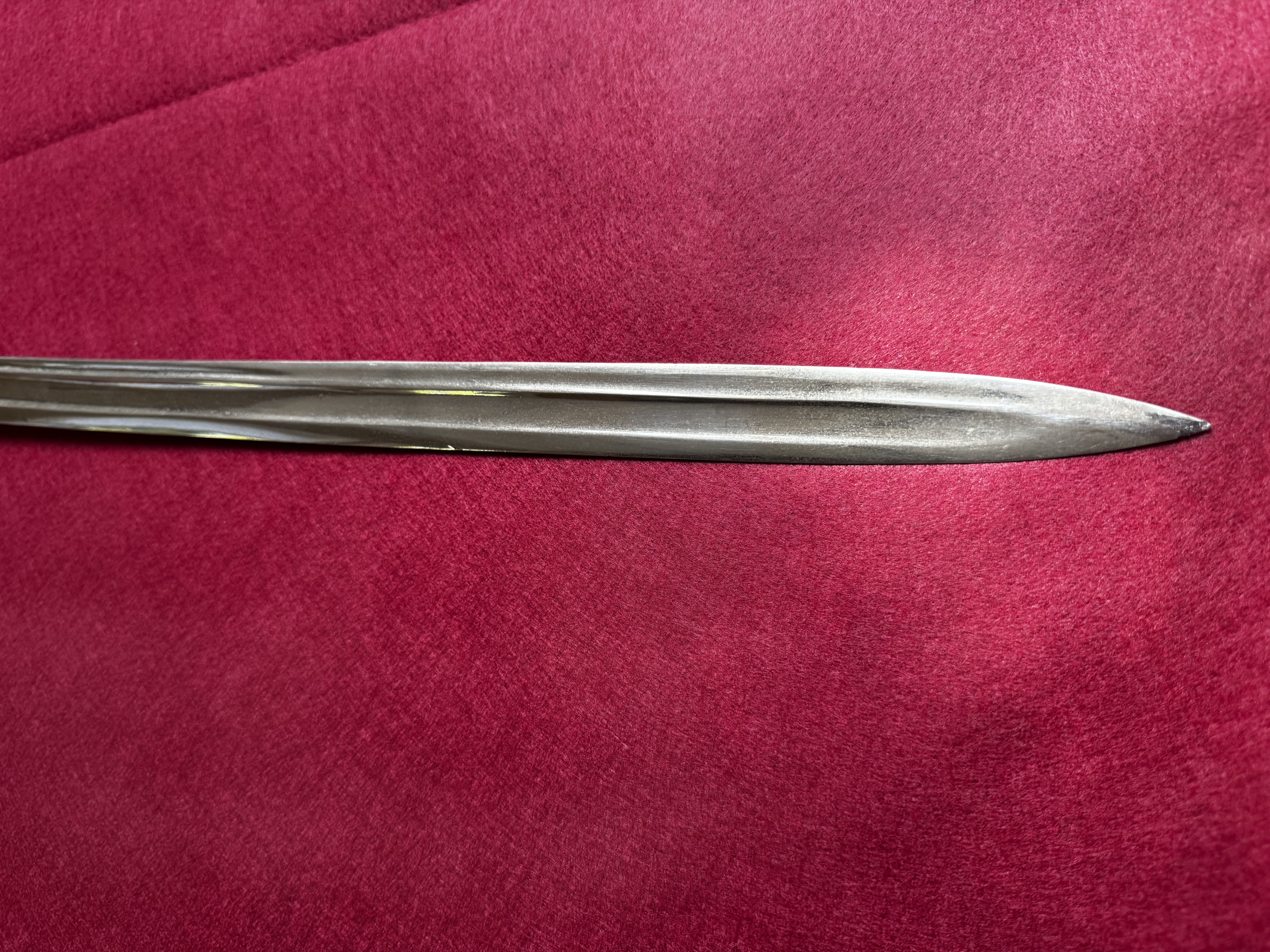
Supplementary artifact view.
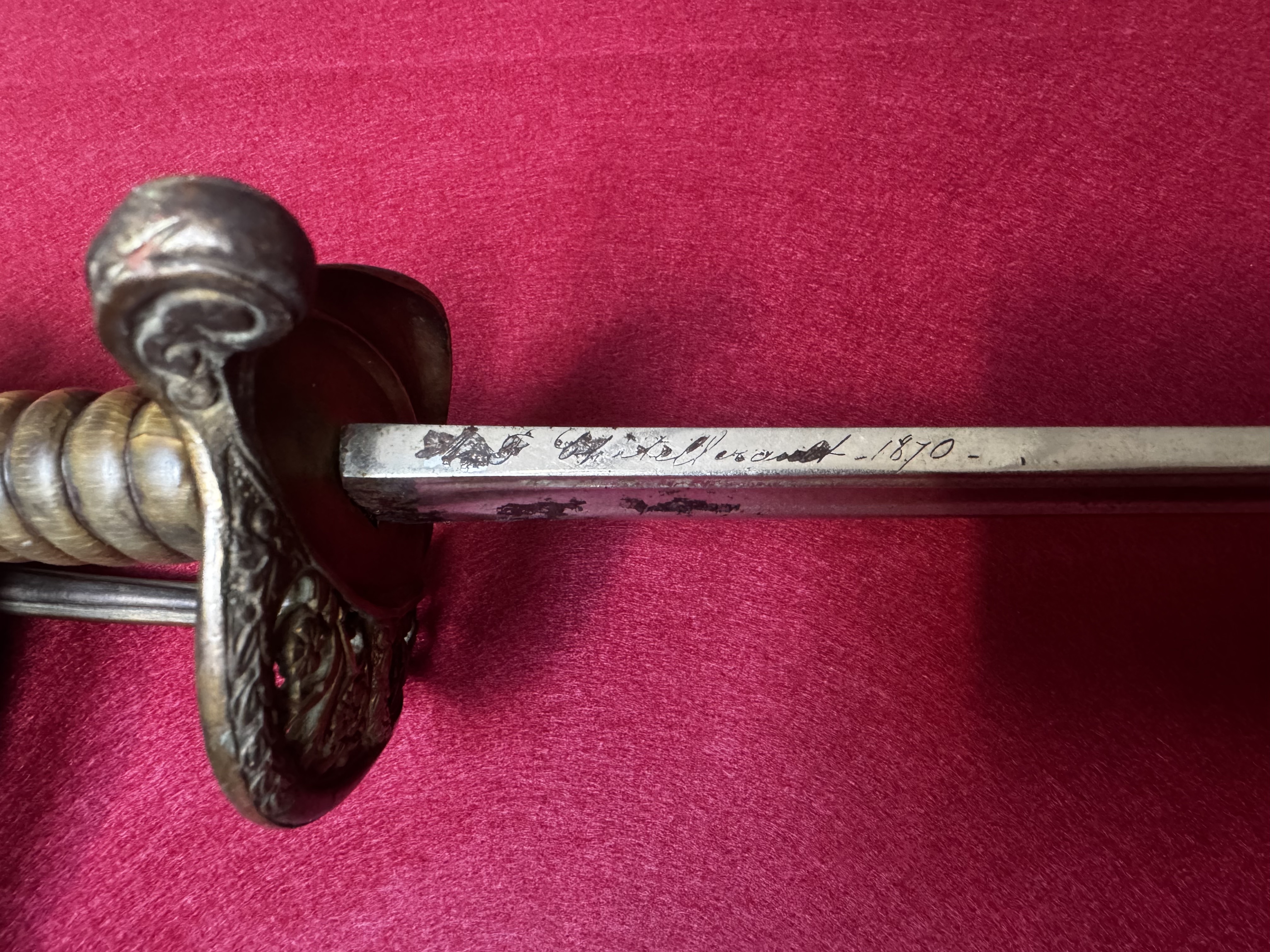
Supplementary artifact view.
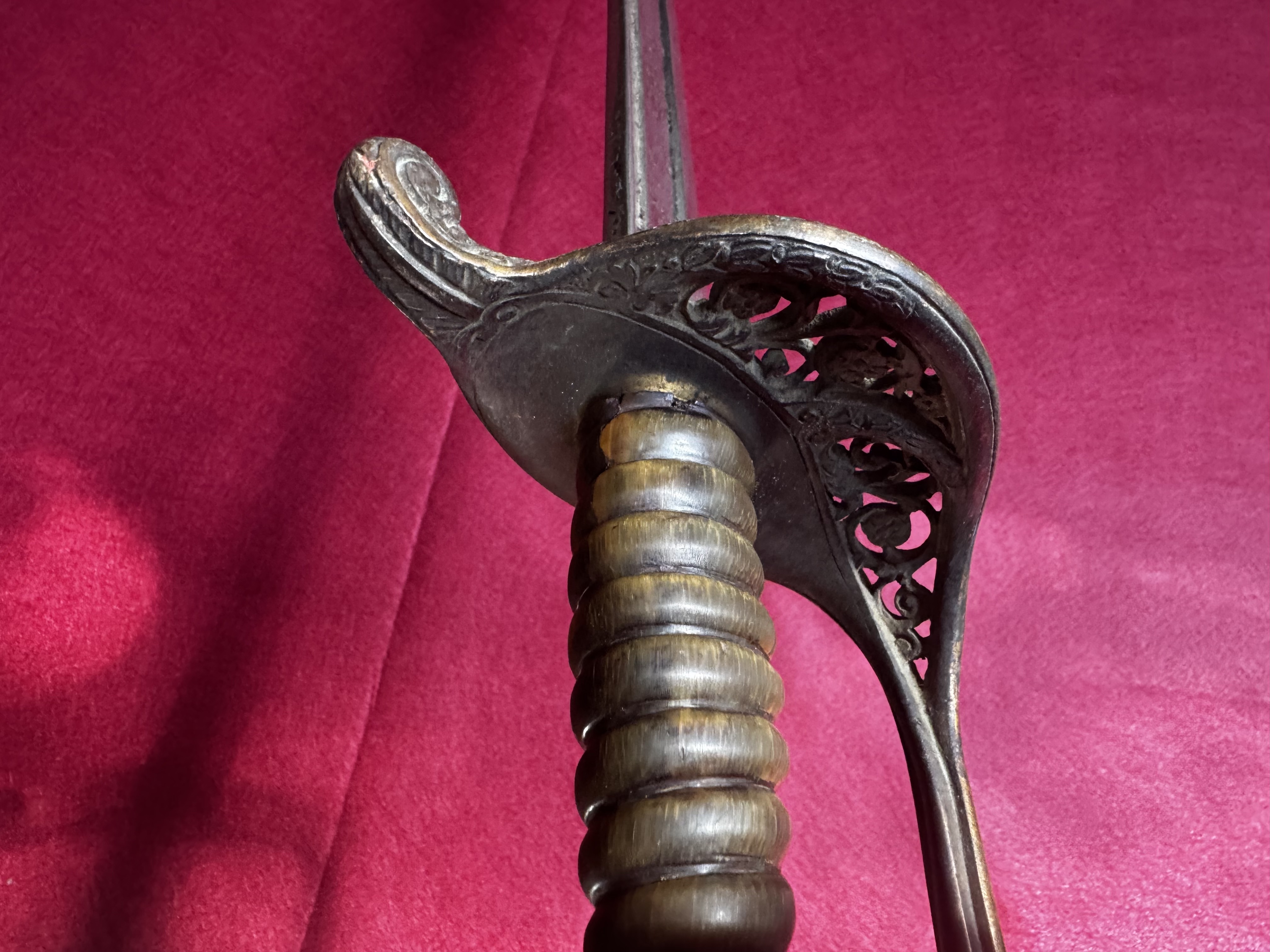
Supplementary artifact view.
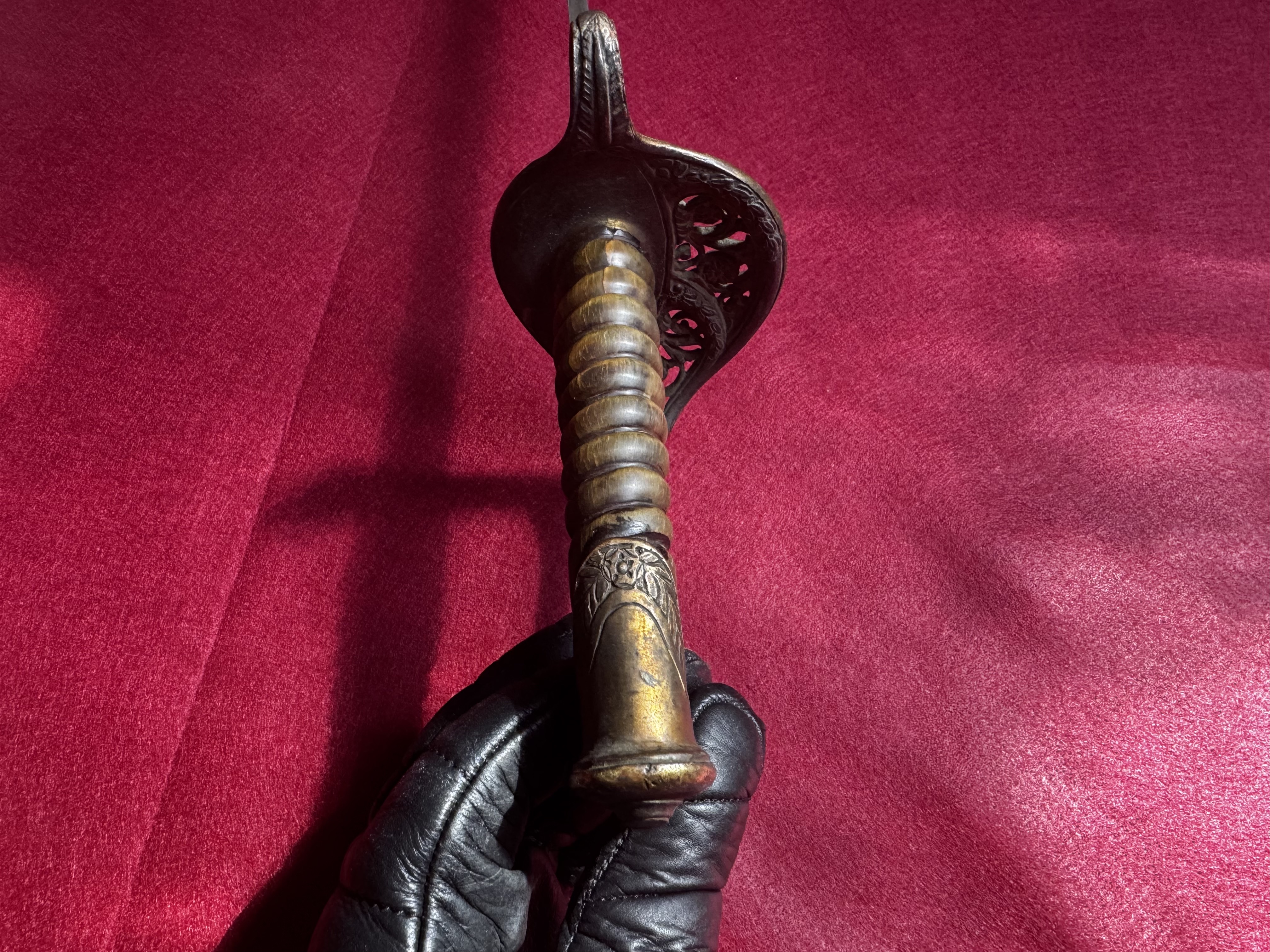
Supplementary artifact view.
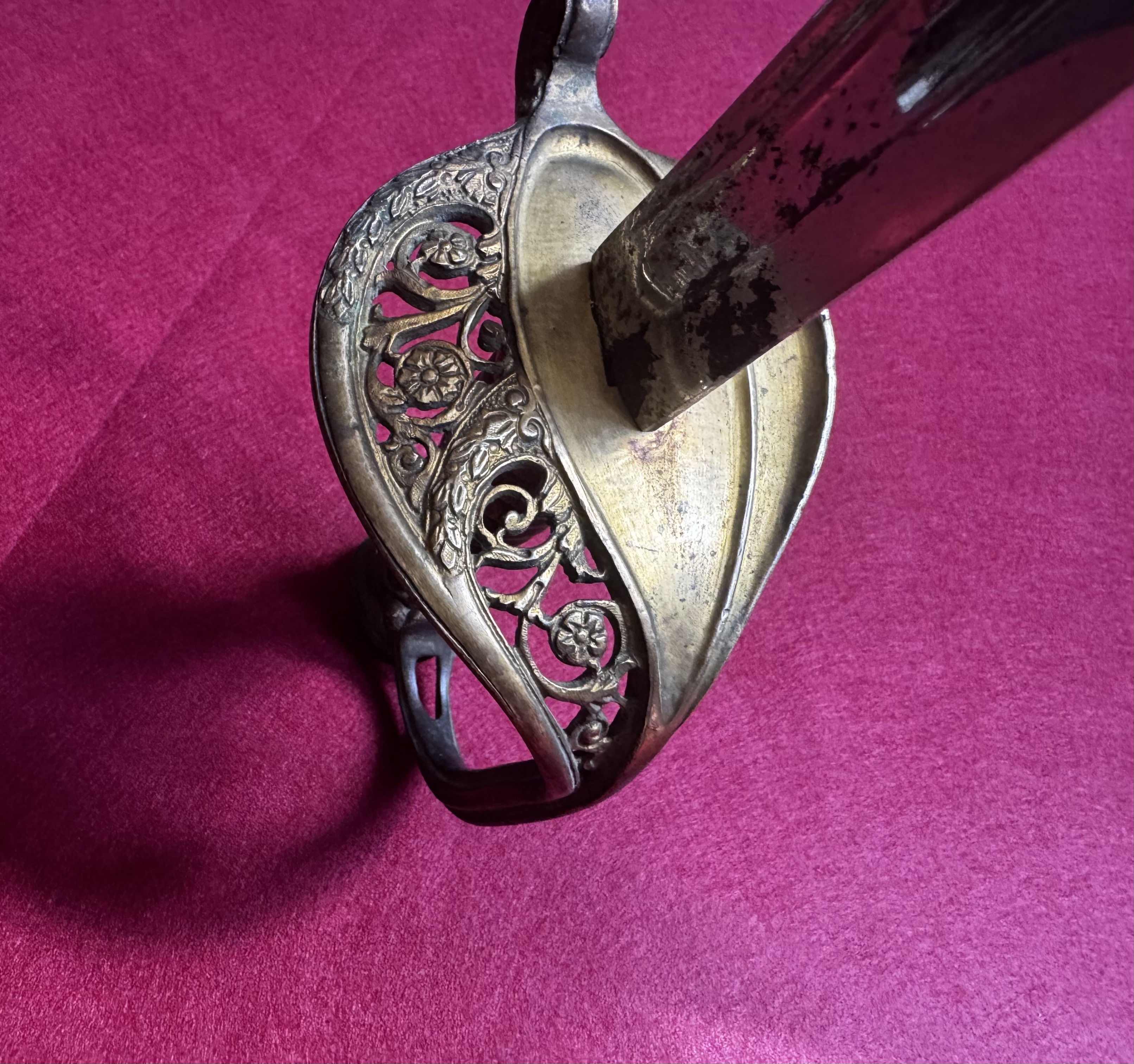
Supplementary artifact view.
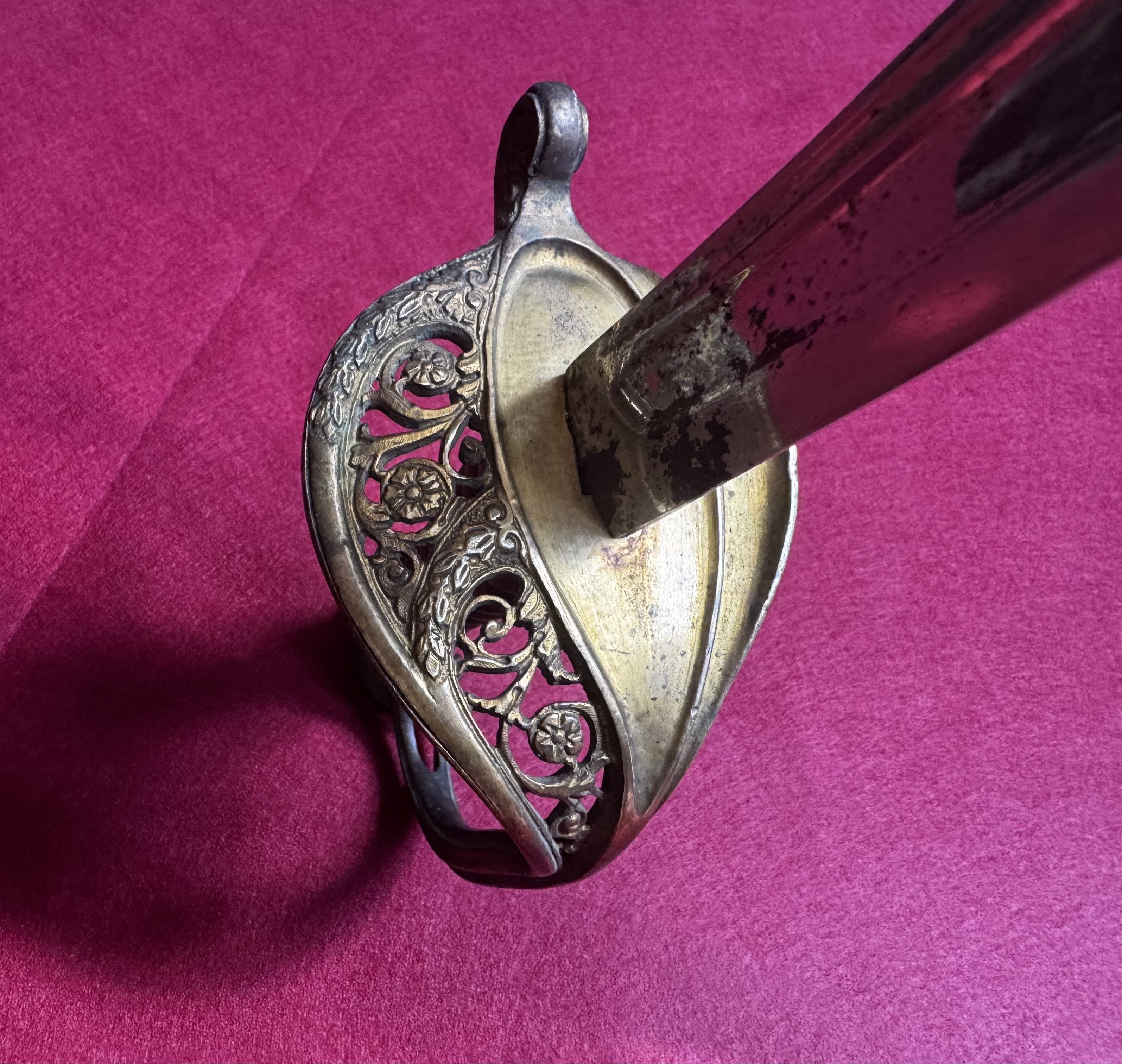
Supplementary artifact view.
| Overall length | [mm / in] |
| Blade length | [mm / in] |
| Blade width (at ricasso) | [mm / in] |
| Blade thickness (at ricasso) | [mm / in] |
| Point of balance | [mm / in from guard] |
| Weight | [g / lb] |
| Fullers | [description] |
| Edge geometry | [description] |
| Hilt material | [brass / steel / etc.] |
| Grip | [wood/leather/wire/etc.] |
| Scabbard | [present/absent; material; markings] |
Observed markings: [List spine, ricasso, guard, scabbard marks]
Interpretation: [Arsenal/manufacturer, inspector marks, unit marks, export marks]
Identification basis: [Pattern features, dimensions, comparison references]
References: Add citations to books, catalogs, museum collections, or archival documents.
[List acquisition details, prior owners (if known), dealer notes, and supporting documentation.]